
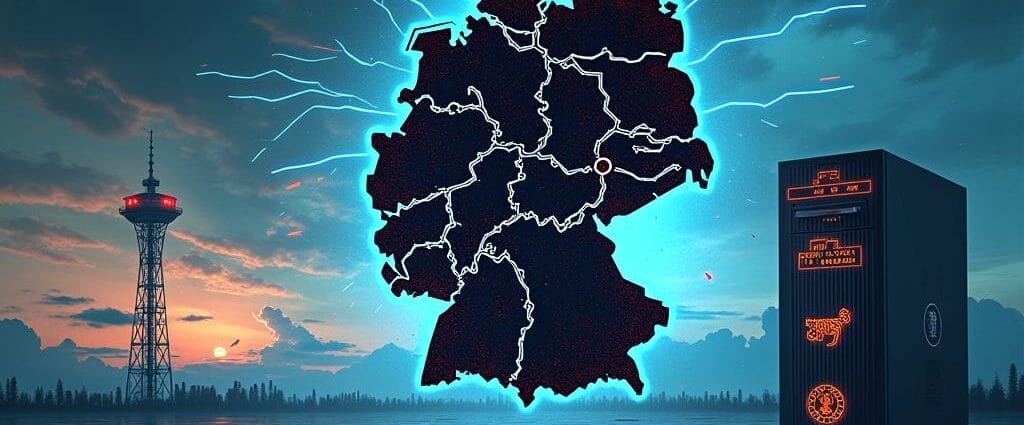
Germany’s public attribution of the August attack on its air safety systems to APT28 (Fancy Bear) and the naming of the Storm 1516 campaign as an attempt to undermine February’s federal election is not a distant drama — it is a blueprint for what modern statecraft looks like when war moves into packets and pipelines.
That sentence sounds heavy because it should. When a foreign ministry stands up and says, bluntly, that a foreign state used cyber operations to meddle with aviation safety and democratic processes, this is not theatre. This is escalation. This is a statement of intent and a call to action, and Europe’s reaction — summoning the ambassador, proposing individual sanctions for hybrid actors, preparing countermeasures — is rightly unambiguous.
Why the attribution matters
Attribution is hard. The public announcement changes that; it forces a conversation from speculation to response. Germany did two things here: it named a known actor, APT28, a group with a track record of targeted operations, and it identified a campaign — Storm 1516 — aimed at political destabilisation. That dual naming closes off comfortable gray areas. It tells allies and adversaries that the evidence has been vetted and that the response will follow.
I remember speaking to a friend who works near one of Europe’s major airports shortly after the August incident. His voice was tight on the phone. “We had screens flicker. Voices on the channel said things didn’t add up,” he told me. He wasn’t a technical person; he was an operations manager who saw the human cost: flights delayed, families anxious, controllers working in disrupted workflows. You can talk about packets and proxies until you’re hoarse, but don’t lose sight of the fact that these are human systems with human stakes.
What this portends for organisations everywhere
Let’s be clear: when critical infrastructure like air traffic management is targeted, every organisation that depends on predictable transport, supply chains, or public trust is at risk. The Germany announcement signals that adversaries are willing to escalate beyond data theft to operational disruption. That shift demands different thinking.
- Expect intentional disruption. Adversaries are no longer satisfied with espionage; sabotage and chaos are on the menu.
- Assume persistence. Groups like APT28 have historically aimed for long-term footholds, not one-off intrusions.
- Prepare for hybrid tactics. Cyber operations will be paired with disinformation and kinetic probes — drones, in recent reports — to amplify effect.
Practical moves for SMEs and organisations
For small and medium organisations, especially those in hubs like Singapore with global ties, the playbook must be assertive and pragmatic. You don’t need a multimillion-dollar security budget to raise your baseline significantly.
- Segment networks — keep critical operational systems isolated from administrative and guest networks. If the bad guys get in, they should not have a straight run to control systems.
- Focus on detection — invest in logging and basic endpoint detection. Knowing quickly that something is wrong matters more than pretending your perimeter is infallible.
- Practice incident response — run tabletop exercises that include scenarios of service disruption, not just data breaches. Time and clarity under stress save lives and reputations.
- Supply chain vigilance — vet third-party providers; ask hard questions about their resilience and patching cadence. A weakness in a supplier can be your vulnerability.
- Backups and failovers — test them. Backups that won’t restore under pressure are just expensive archives.
- Train, hard and often — phishing still works. Human operators are both your first line of defence and, often, the path of least resistance for attackers. Make training realistic and memorable.
A word on diplomacy and deterrence
Germany’s actions — summoning an ambassador and coordinating sanctions — are essential parts of deterrence. When silent attribution and quiet diplomacy are insufficient, public shaming and targeted economic measures are the logical escalation. Deterrence in the cyber age is complex: it blends law, economics, and the credible threat of retaliatory cyber or non-cyber measures. That complexity is why allies must coordinate closely; unilateral responses are toothless or dangerously escalatory on their own.
Emotion is not extraneous here. There is anger — from citizens whose safety felt compromised, from election officials whose work was targeted, from governments who see a pattern of hybrid warfare. That fury is a legitimate political force; it helps drive accountability. But anger without strategy becomes noise. Channel it into resilient systems and predictable responses.
Final thought
Germany has signalled something important to the international community: there are limits to patience. The naming of APT28 and Storm 1516 is a declaration that hybrid operations aimed at physical safety and democratic integrity will be met with consequences. For organisations sitting outside the centre of geopolitics, this matters because it shifts the threat landscape. Prepare for a world where disruptions are not random but targeted, where information is weaponised and physical systems are fair game.
Act now. Reassess assumptions. Run the exercises you keep postponing. This is not a precautionary tale — it is a plan for what to do next. The stakes are too high to treat it as theoretical.